24/7 Electrician
Power Outage Safety Tips for Families in South Florida
When the lights go out, a calm plan keeps your family safe. Practical tips for light, food, cooling, electronics and children during a South Florida outage.
Outages in South Florida come in many forms. A thunderstorm takes out a transformer for a few hours. A hurricane leaves a neighborhood dark for days. A failed part on a pole affects one block while the next one glows. In every case the family inside the house has the same questions: how do we see, stay cool, keep food safe, and avoid doing anything that makes things worse?
This guide is for households with children, older relatives, pets and the usual pile of devices. It focuses on safe, simple habits and avoids anything that involves working on the wiring. Think of it as a short plan you can read now, while the lights are on, and share with everyone in the house.
The first few minutes when the power goes out
The first step is to find out how far the outage extends. Look outside. If the neighbors are dark too, the problem is probably with the utility. If only your house is dark, the issue may be in your own electrical system, such as a tripped main breaker, and that calls for a different approach. Our article on what to do when power is out in half the house covers partial outages.
Next, switch on a battery flashlight or a lantern rather than lighting candles. Make sure everyone is safe, calm and in a spot where they will not trip in the dark.
If you know how to do it safely and the panel is dry, you can note whether the main breaker has tripped. Do not try to fix anything at the panel with wet hands or in wet conditions, and do not open the panel cover. If you suspect a problem inside the house, such as a burning smell, sparks or a buzzing sound, treat it as an electrical emergency and call for help.
- Check on everyone, including older adults and anyone who depends on powered medical equipment.
- Turn off or unplug sensitive electronics so they are protected when power returns.
- Leave one light switch on so you notice when power is restored.
- Report the outage to your utility if you have not already.
Make a family rule for the dark
One of the most helpful things a family can do is agree on a few rules before the lights go out. Where does everyone meet? Who is in charge of the radio, the flashlights and the kit? Which rooms stay closed to keep cool air in, and which are the safest places to sit? Children respond well to rules they helped create, and adults make fewer mistakes when there is a plan to follow.
Keep everyone away from the electrical panel, the generator and any fuel. Make clear that the area around them is off limits to children and pets, whatever the weather, and that cords and plugs are not toys.
Lighting that will not start a fire
Light is the first thing most people want, and candles are the first thing many people reach for. Open flames are a leading cause of home fires during outages, especially when children, pets and curious toddlers are around, and when a candle sits near curtains, papers or bedding.
Battery-powered lanterns and flashlights are much safer. LED models last a long time on a set of batteries, and some can be recharged from a power bank. A headlamp is useful for adults who need both hands available. Keep a flashlight in each bedroom and in the kitchen, and make sure the batteries are fresh at the start of every storm season.
If you must use a candle, keep it in a sturdy holder on a stable surface, away from anything flammable, and never leave it burning when you leave the room or go to bed. Never use a grill, camp stove or gas oven for lighting or heating indoors, since these produce carbon monoxide and can start fires.
Glow sticks are a good choice for children, and for marking stairs and doorways. A small battery nightlight in a hallway can prevent falls.
Staying cool in Florida heat and humidity
In the South Florida summer, losing air conditioning is more than an inconvenience. Heat and humidity build up in a closed house, and older adults, infants, pregnant women and people with chronic conditions are especially vulnerable to heat illness.
Open windows only if the weather is safe and the area is secure. Move air with battery fans, wear light clothing, drink plenty of water and rest in the coolest part of the home, usually a lower floor or an interior room that gets little direct sun. Keep blinds and curtains closed on sun-facing windows during the day.
- Never leave children or pets in a parked car to cool off.
- Watch for signs of heat illness: heavy sweating, weakness, dizziness, nausea, headache, or hot, dry skin. Seek medical help if these appear.
- Consider spending the hottest hours at a cooled public place, such as a shelter or a relative's home, if the outage is long.
If you own a generator, resist the urge to run it indoors for cooling. Our home battery backup systems article covers a quieter option for homes that want to ride out outages with less hassle.
Cooking and heating safely
Outdoor grills and camp stoves are for outdoor use only, in an open area well away from the house, with no tent, awning or lanai over them. Indoor use of charcoal or gas appliances not designed for it sends carbon monoxide into the living space. Eat foods that need little or no cooking when you can, and keep a manual can opener on hand.
If your home uses gas appliances, such as a range or water heater, be aware that some models need electricity to operate their ignition or controls. If you smell gas, leave the house, avoid switches and flames, and call the gas utility or emergency services from outside.
Space heaters are rarely needed in a South Florida outage, but a cold snap can happen. Never use a fuel-burning heater indoors without proper venting, and keep any heater away from flammable materials.
Food safety without power
The refrigerator and freezer are the biggest worry for most families. A few simple habits keep food safe for longer. Keep the doors closed as much as possible. A closed freezer holds its cold for a long time, and a full freezer holds it longer than a half-empty one. A refrigerator warms sooner, so plan to use the most perishable items first.
Group cold items together. Consider moving essential items to a cooler packed with ice if the outage looks long. Keep a thermometer in the fridge and freezer if you have one, because temperature is a better guide than appearance or smell.
Food safety agencies give clear guidance on how long different foods can safely stay above safe temperatures, and it is worth looking up their advice rather than guessing. The general rule is simple: when in doubt, throw it out. Never taste food to see if it is still safe.
Use a cooler with ice for medications that must stay cold, such as some insulin products, and ask your pharmacist for guidance on how long your specific medicine can be out of refrigeration.
Keeping phones and devices running
Phones become a lifeline in an outage: for news, for alerts, for calling family and for flashlights. Treat battery life like a resource. Lower the screen brightness, turn on battery saver, and close apps you are not using. Text messages generally use less network capacity than calls and often get through when calls do not.
Charged power banks are a worthwhile investment. Keep at least one fully charged and stored with your flashlights. A car charger can also help, but run the car only outdoors in an open area, never inside a closed garage, because exhaust fumes are deadly.
A battery or hand-crank radio keeps you informed even if mobile networks are congested or down. Many families also keep a printed list of key phone numbers, in case a phone dies.
Unplug sensitive electronics, such as computers, televisions and gaming systems, or connect them to a surge protector that you switch off. This protects them from the surge that can occur when power comes back. We cover that moment in more detail in a separate post, and the whole home surge protection page explains the permanent option.
Security and awareness while the lights are out
Dark streets and unlit homes can make people feel uneasy. Keep doors locked, keep a light on a battery in a visible spot near an entrance, and make sure everyone knows how to leave the house safely if they need to. Keep a flashlight and shoes by each bed so nobody walks barefoot through broken glass or debris after a storm.
Be careful with alarm systems and electric gates, garage doors and door locks. Many have battery backups and manual releases, and it is worth learning how those work in advance. A garage door opener, for example, usually has a release handle that lets you open the door by hand. Smart locks and keypads may keep working on batteries, but check them.
If you do need to leave, do not drive through flooded roads or around downed lines. Turn around and find another way.
Generators, fuel and carbon monoxide
Carbon monoxide poisoning is a risk every time a family uses a generator, a charcoal grill, a camp stove or a car in an enclosed space. The gas cannot be seen or smelled, and it kills quietly.
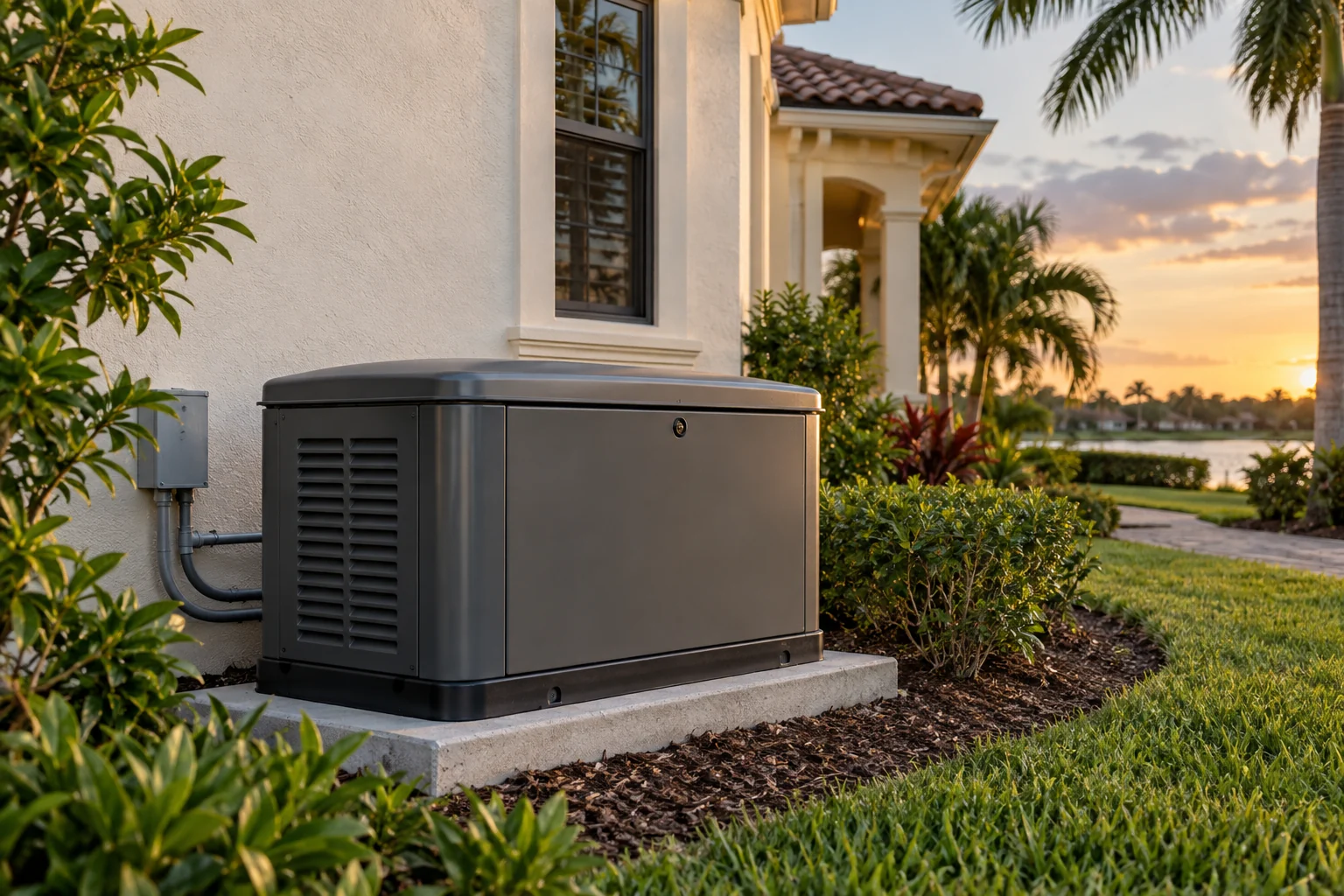
If you use a portable generator, keep it outdoors, far from windows, doors and vents, and point the exhaust away from the house. Never place it in a garage, a lanai or under a carport attached to the house. Keep battery-powered carbon monoxide alarms working and in place near sleeping areas.
Plug appliances straight into the generator with outdoor-rated cords. Never plug the generator into a wall outlet to power the house. That practice, called backfeeding, can injure utility workers and start fires. If you want to power circuits in the house, an electrician can install a transfer switch or interlock the right way.
Store fuel safely, away from the house, and refuel only when the generator has been shut off and allowed to cool. The right preparation keeps the generator from becoming a hazard of its own.
Children, pets and older family members
Every household member has different needs during an outage. Children may be frightened by the dark and by the noise of storms. Older adults may depend on medical devices, and they are also more vulnerable to heat. Pets feel stress and are affected by heat just as people are.
For children, keep the tone calm and give them jobs. A child with a flashlight and a task, such as counting batteries or reading aloud, feels part of the solution. Keep fragile or dangerous objects out of the way and make sure everyone knows not to touch outlets, cords or generators.
For older adults and people with medical needs, make a plan before an outage. Know which devices need power, how long their backup batteries last, and what to do if backup runs out. Register with local emergency management if there is a program for people who rely on powered medical equipment.
For pets, keep water available, keep them indoors in the coolest part of the home, and keep carriers, leashes and any medications ready if you need to leave.
Working from home and remote learning during an outage
Many families now rely on laptops, routers and cloud services. When the power fails, the router goes down, and so does home internet. A laptop on battery and a phone hotspot can bridge the gap for a while. Charge devices whenever you have the chance, save your work often and keep a list of what must be done and what can wait.
If you work from home and an outage is long, plan to move to a location with power. A small battery backup for the router and modem keeps basic internet running during short outages, though it will not keep the whole home powered. It is a modest purchase that makes everyday life easier when the grid has a hiccup.
Water, wet areas and downed lines
Outages that come with storms often come with water. Floodwater is dangerous in many ways, and when it reaches electrical equipment it adds the risk of electric shock. Stay away from standing water if there is any chance it touches cords, outlets or the panel. Do not wade through floodwater outside either, since a downed line can energize the water.
If you see a downed power line, stay far away, keep others away and call the utility and emergency services. Treat every downed line as live. Do not try to move it or drive over it.
After a flood, do not use outlets, appliances or the panel that got wet, and do not reset breakers in a flooded home. Our hurricane season electrical checklist and the hurricane and storm electrical prep guide go into detail about preparing in advance.
What to do when the power comes back
The moment of restoration deserves its own plan. Power often returns in surges or flickers on and off several times. Appliances that were running when the power went out may start up all at once, which can trip breakers and strain equipment.
Stagger your restart. Give the utility a short time to stabilize before turning large loads back on. Plug in electronics one at a time, and bring back the air conditioner after other appliances are running. Reset the clocks on your equipment. Check the freezer and fridge and decide what to keep.
- If breakers trip when power returns, do not keep resetting them. Something may be wrong.
- If you smell burning or see scorched outlets or devices, switch the area off if it is safe to do so and call for service.
- If only part of the house has power, there may be a problem in your own wiring, not just the grid.
When something does not seem right, a qualified electrician can find out why. Our power outage response page describes what that kind of visit involves.
Water systems can be affected too. Well pumps and booster pumps stop without power, so households on a well may lose running water. Fill a few containers with clean water before a forecast storm, and keep a stock of drinking water. If your water service is disrupted or there is a boil-water notice, follow the guidance from local officials.
Finally, give yourself permission to be patient. Utilities restore power in an order that begins with the most critical facilities and the largest groups of customers. Your wait may be longer than you hope, so a plan that works for a day or two without stress will serve you well.
Build a simple outage kit before you need one
A few items make an outage much easier. Gather them in a bin or a bag in a closet that is easy to reach, and tell everyone where it is.
- Flashlights, headlamps and lanterns, with spare batteries.
- A battery or hand-crank radio.
- Charged power banks and charging cables.
- A first aid kit and any essential medications.
- Bottled water and non-perishable food that needs no cooking.
- A manual can opener, cooler and ice packs.
- Battery-powered fans and carbon monoxide alarms.
- Important papers, cash and a printed contact list.
Check the kit at the start of each hurricane season, and swap out old batteries and expired supplies. A kit that is ready turns a stressful night into an inconvenience.
Common questions
Is it safe to use candles during a power outage?
Battery-powered lanterns and flashlights are much safer. If you use a candle, keep it in a sturdy holder, away from anything flammable, and never leave it burning unattended.
How can I keep my family cool without air conditioning?
Use battery fans, drink water, wear light clothing, close blinds on sunny windows and rest in the coolest part of the house. Watch for signs of heat illness and seek help or a cooler location if symptoms appear.
Should I unplug appliances during an outage?
Yes, unplug or switch off sensitive electronics and large appliances so they are not hit by a surge when power returns. Leave one light on so you notice when power is restored.
Is a portable generator safe to use at home during an outage?
It can be if it is run outdoors, away from the house, with working carbon monoxide alarms and proper cords. Never run it in a garage or connect it to a wall outlet. A transfer switch is the safe way to power house circuits.
What should I do if the power comes back and breakers keep tripping?
Do not keep resetting them. Leave the tripped breaker off and have an electrician find the cause, since there may be a fault in the wiring or an overloaded circuit.
If your outage turns out to be a problem inside your own home, call (954) 602-0050 and describe what you are seeing. Standard jobs are quoted by phone before dispatch. Complex jobs are quoted on site and carry a service call charge, and the electrician comes to you. Urgent problems can use our 24-Hour Emergency Line.
Request Service
Tell us what is happening and we will take it from there
Fill this out and the office gets the whole picture at once: what is wrong, where the property is, how you get in, and when you need somebody. That means the electrician who calls you back already knows the job instead of starting the conversation from zero.
If the power is out or something smells like it is burning, do not type. Call (954) 602-0050. We answer the phone around the clock.
Where We Work
36 cities across three counties
Every city has its own page for planned work, and its own page for after hours. Please choose the name of your city, or tap 24hr for the emergency page.
Broward County
- Coconut Creek24hr
- Cooper City24hr
- Coral Springs24hr
- Dania Beach24hr
- Davie24hr
- Deerfield Beach24hr
- Fort Lauderdale24hr
- Hallandale Beach24hr
- Hillsboro Beach24hr
- Hollywood24hr
- Lauderdale-By-The-Sea24hr
- Lauderdale Lakes24hr
- Lauderhill24hr
- Lighthouse Point24hr
- Margate24hr
- Miramar24hr
- North Lauderdale24hr
- Oakland Park24hr
- Parkland24hr
- Pembroke Park24hr
- Pembroke Pines24hr
- Plantation24hr
- Pompano Beach24hr
- Southwest Ranches24hr
- Sunrise24hr
- Tamarac24hr
- West Park24hr
- Weston24hr
- Wilton Manors24hr