24/7 Electrician
Home Battery Backup Systems: What Broward Homeowners Should Know
Understanding whole-home battery backup systems for Broward County homes: how they work, sizing, solar integration, and installation requirements.
Whole-home battery backup systems have become a serious alternative to traditional generators for Broward County homeowners, particularly for those wanting silent, fuel-free backup power without the maintenance a combustion generator requires.
How Battery Backup Systems Actually Work
Unlike a generator that produces power on demand by burning fuel, a battery backup system stores electricity ahead of time, either from the grid during off-peak hours or from paired solar panels, then discharges that stored power during an outage through an inverter that converts it to usable household current.
Sizing a System Correctly
Battery capacity is measured in kilowatt-hours, and correct sizing depends on which circuits you want backed up and for how long. Backing up your entire home's continuous load requires significantly more capacity than backing up just essential circuits like refrigeration, a few lights, and medical equipment.
Solar Integration
Battery systems paired with solar panels can recharge during daylight hours even during an extended outage, extending backup duration well beyond what the battery's stored capacity alone would provide. A battery-only system without solar depletes once its stored charge is used and can't recharge until grid power returns.
Electrical Panel and Circuit Considerations
Installing a battery backup system typically requires a dedicated backup subpanel isolating the circuits you want protected, along with an automatic transfer switch managing the changeover between grid and battery power without manual intervention.
Permitting Requirements
Broward County requires permits for battery backup system installation, including electrical plan review and inspection, given these systems interact directly with your home's main electrical service and, where paired with solar, involve additional utility interconnection requirements.
Battery Systems vs. Generators: Real Tradeoffs
Battery systems run silently and require no fuel storage or refueling, but have finite capacity without solar recharging and generally cost more upfront. Generators can run indefinitely with fuel supply but require regular maintenance, produce noise and exhaust, and need safe outdoor placement.
Hurricane Season Considerations
For South Florida's hurricane season specifically, battery systems avoid the fuel supply chain issues that can affect generator refueling during widespread outages, though extended multi-day outages without sun for solar recharging favor a generator's continuous fuel-based operation.
Maintenance Requirements
Battery backup systems require substantially less routine maintenance than generators, no oil changes or fuel system upkeep, though periodic system checks confirm the battery and inverter remain in good working order.
Battery Chemistry and Longevity
Most modern home battery systems use lithium iron phosphate chemistry, chosen specifically for its stability and long cycle life compared to older lithium-ion formulations. These batteries are rated for thousands of charge and discharge cycles, and most manufacturers back them with warranties spanning a decade or more, reflecting genuine confidence in long-term performance under normal residential use patterns.
Stacking Multiple Battery Units
Many battery backup systems are modular, meaning a homeowner can start with a single unit and add additional batteries later as budget allows or as backup needs grow. This modularity gives Broward County homeowners flexibility to begin with essential-circuit backup and expand toward whole-home coverage over time, rather than needing to commit to full capacity in a single upfront installation.
Inverter Selection and Output Quality
The inverter converting stored battery power to usable household current matters as much as the battery itself. A quality inverter produces clean, stable power appropriate for sensitive electronics, while a lower-quality inverter can produce power that, while technically functional, may cause issues with certain equipment over time. Matching inverter capacity to your home's actual simultaneous load, not just average consumption, avoids a system that struggles when multiple appliances run at once.
Backup Subpanel Circuit Selection
Deciding which circuits to route through a backup subpanel is one of the more important planning decisions in a battery backup installation. Refrigeration, essential lighting, network equipment for communication, well pumps where applicable, and medical equipment are common priorities. Air conditioning, while highly desirable during a Florida outage, draws enough power that backing it up meaningfully increases the required battery capacity and system cost.
Monitoring and Smart Home Integration
Most modern battery backup systems include a smartphone app providing real-time monitoring of battery charge level, current power draw, and system status. This visibility lets homeowners make informed decisions during an extended outage, such as which non-essential loads to manually disconnect to extend remaining battery runtime, rather than discovering capacity limits unexpectedly.
Utility Interconnection and Net Metering
For battery systems paired with solar, interconnection agreements with the local utility govern how excess solar production interacts with the grid outside of outage periods. Understanding your specific utility's net metering policies affects both the system's day-to-day value and how it's configured to prioritize battery charging versus grid export during normal operation.
Comparing Total Cost of Ownership
While battery systems generally carry a higher upfront cost than a comparably capable generator, the comparison should account for the generator's ongoing fuel costs, more frequent required maintenance visits, and shorter typical equipment lifespan. Over a decade or more of ownership, the total cost gap between the two technologies is often narrower than the upfront price difference suggests.
Installation Timeline and Process
A typical battery backup installation involves an initial site assessment and load calculation, electrical permit application, the physical installation of battery units and the backup subpanel, connection to any paired solar system, and final inspection. Most residential installations are completed within one to two days of on-site work, though permit processing time varies by jurisdiction within Broward County.
Comparing Major Battery System Manufacturers
Several manufacturers now compete in the residential battery storage market, each with different approaches to capacity, modularity, and integration with existing home electrical systems. Rather than choosing based on brand recognition alone, comparing actual usable capacity (not just nameplate capacity, which sometimes includes a reserve buffer not available for regular use), warranty terms, and compatibility with your home's existing or planned solar system gives a more accurate picture of which system genuinely fits your household's needs.
Depth of Discharge and Usable Capacity
Battery systems typically don't discharge to zero percent in normal operation, reserving a small buffer to protect long-term battery health. Understanding a system's usable depth of discharge, versus its total rated capacity, matters when calculating how long a given battery will actually power your essential circuits during an outage, since the marketed capacity number isn't always the number you can actually rely on.
Peak Shaving and Time-of-Use Rate Benefits
Beyond emergency backup, battery systems in areas with time-of-use electricity pricing can charge during off-peak, lower-cost hours and discharge during peak pricing periods, providing genuine bill savings even outside of any actual outage. Broward County homeowners on utility rate plans with meaningful peak and off-peak pricing differences may find this ongoing benefit offsets a meaningful portion of the system's cost over its lifespan.
Sizing for Specific Appliance Loads
Refrigerators typically draw modest continuous power but spike during compressor startup. Well pumps, where relevant, draw significant power during operation. Medical equipment needs vary enormously by device. A proper sizing consultation accounts for both continuous load and startup surge requirements across every circuit you want backed up, not just an average estimate that might undersize the system for real-world simultaneous demand.
Weatherproofing and Outdoor Installation Considerations
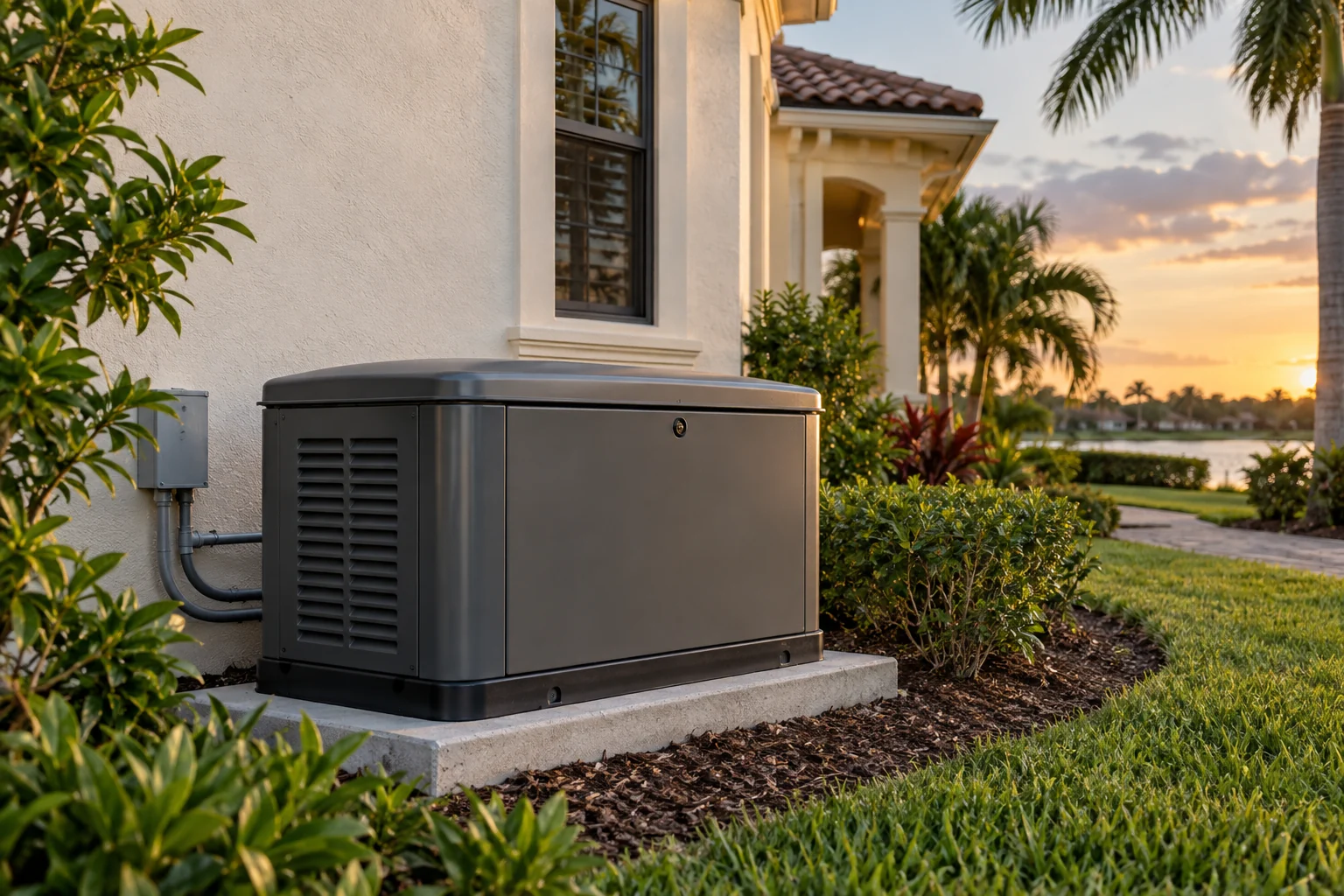
Most residential battery systems are rated for outdoor installation, an important consideration in Florida where indoor space is often at a premium. Outdoor-rated units are designed to withstand humidity and temperature swings, though placement should still avoid direct, prolonged flood exposure risk areas and should maintain manufacturer-specified clearances for both safety and proper cooling airflow around the unit.
Fire Safety and Battery Chemistry Choices
Lithium iron phosphate chemistry, now standard in most quality residential battery systems, offers meaningfully better thermal stability than older lithium-ion chemistries used in early-generation home batteries, reducing (though not eliminating) fire risk concerns that were more relevant to earlier battery storage technology.
Working With Your Solar Installer and Electrician Together
For homeowners installing battery storage alongside new or existing solar, coordination between the solar installer and the electrician handling panel and backup subpanel work ensures the complete system, panels, inverter, battery, and backup circuits, functions as an integrated whole rather than as separately installed components with integration gaps.
Financing and Incentive Considerations
Battery storage systems, particularly when paired with solar, may qualify for federal tax incentives, and understanding current incentive structures before finalizing a system purchase can meaningfully affect the actual net cost of installation.
Long-Term System Degradation
Like all batteries, home storage systems experience gradual capacity degradation over years of charge and discharge cycles. Understanding a manufacturer's stated degradation curve and warranty coverage for capacity loss over time helps set realistic long-term expectations rather than assuming day-one capacity remains constant for the system's entire rated lifespan.
Battery Placement and Setback Requirements
Local building codes typically specify minimum setback distances between battery storage units and doors, windows, and property lines, reflecting fire safety considerations specific to battery storage technology. Confirming your property has adequate space meeting these requirements is part of initial site assessment before installation planning proceeds.
Comparing Battery Backup to a Whole-Home Generator Investment
Beyond the direct cost comparison, homeowners weighing battery storage against a traditional generator should consider factors like available outdoor space, any HOA restrictions on generator noise or fuel storage that might favor a quieter battery system, and personal comfort level with the different maintenance profiles each technology requires over a multi-decade ownership period.
Understanding Round-Trip Efficiency
Battery systems don't return exactly the same amount of energy discharged as was originally stored, due to conversion losses inherent in charging and discharging cycles. This round-trip efficiency, typically in the 85 to 95 percent range for quality systems, affects both backup capacity calculations and any ongoing bill-savings benefit from time-of-use rate arbitrage.
Multi-Day Outage Planning
For homeowners specifically concerned about multi-day outages common after major hurricanes, realistic planning means understanding exactly how many days of essential-circuit backup your specific battery capacity provides without solar recharging, and whether that duration genuinely meets your household's risk tolerance for extended grid outages.
Battery System Software Updates and Connectivity
Modern battery systems typically receive periodic firmware updates from the manufacturer, improving performance, adding features, or addressing any discovered issues. Maintaining the system's internet connectivity ensures it continues receiving these updates rather than running on outdated software indefinitely.
Comparing Single-Phase and Three-Phase Installations
Most Broward County residential installations use single-phase electrical service, and battery systems are designed accordingly. Larger homes or properties with three-phase service require battery system configurations specifically compatible with that service type, a detail confirmed during initial site assessment.
End-of-Life Battery Disposal and Recycling
Home battery systems, like all lithium-based batteries, require proper disposal or recycling at the end of their service life rather than standard waste disposal, and understanding your manufacturer's end-of-life program, generally more relevant for planning purposes than an immediate concern given multi-decade expected lifespans, is worth knowing at the time of initial purchase.
Comparing Battery Systems for Small vs. Large Homes
A smaller Broward County home with modest essential-circuit needs may achieve meaningful backup capability with a single battery unit, while a larger home with more extensive backup goals, additional bedrooms, multiple refrigeration units, a home office requiring continuous connectivity, often needs a multi-unit stacked configuration to achieve comparable peace of mind during an extended outage.
The Role of Load Shedding in Battery Backup Design
Some advanced battery backup systems include automated load shedding capability, intelligently disconnecting lower-priority circuits during periods of high demand or low remaining battery charge, extending overall backup duration by automatically deprioritizing less critical loads rather than requiring manual intervention from the homeowner during a stressful outage situation.
Understanding Manufacturer Warranty Fine Print
Battery system warranties vary considerably in what they actually cover, some guarantee a minimum retained capacity percentage after a specified number of years, others focus primarily on defect coverage without capacity guarantees. Reading and understanding these specifics before purchase, rather than assuming all warranties offer equivalent protection, helps set accurate long-term expectations.
Neighborhood and Community Battery Adoption Trends
As battery backup technology has matured and costs have moderated somewhat from early-generation pricing, adoption has grown steadily across South Florida, and homeowners considering installation sometimes find value in discussing real-world experience with neighbors or community members who've already gone through the installation and ownership process.
Battery Systems and Homeowner Association Aesthetic Guidelines
Some Broward County HOA communities maintain guidelines around visible exterior equipment, and battery storage units, while generally more compact than a standalone generator, may still fall under these guidelines, worth confirming with your community before finalizing outdoor placement plans.
Evaluating Your Household's True Backup Priorities
Before finalizing a battery system size, honestly assessing which circuits genuinely matter during an outage, versus which would simply be nice to have, helps avoid both underinvesting in insufficient capacity and overspending on backup for loads that aren't truly essential during a temporary grid outage.
What Happens in the First Seconds of an Outage
Many homeowners are surprised to learn that a standard grid-tied solar system with no battery shuts itself off when the utility grid goes down. This is intentional. Grid-tied inverters are designed to stop sending power onto the utility lines during an outage so that line workers repairing storm damage are not exposed to electricity flowing back from your roof. So a home with solar panels alone can sit in the dark on a bright sunny afternoon after a storm.
A properly installed battery system changes that picture. When the grid drops, the system opens its connection to the utility, forming what installers call an island. Your home, the battery, and any paired solar then operate as a small self-contained power system, completely separated from the utility lines. Because that separation happens automatically, the solar panels are allowed to keep producing and the battery can keep recharging during daylight.
In most modern systems the changeover is fast enough that lights barely flicker and many electronics never notice. Some older or simpler configurations have a short pause while the transfer happens, which can reset digital clocks, restart a router, or cause a desktop computer to reboot. If you work from home or rely on equipment that cannot tolerate even a brief interruption, ask during the design stage how quickly your specific system transfers, and consider a small uninterruptible power supply on the most sensitive device as an extra cushion.
South Florida Heat and Where the Battery Lives
Batteries perform best and last longest within a moderate temperature range, and Broward County summers push the limits of that range. A battery mounted on a west-facing wall in full afternoon sun, or inside a garage that bakes all day with the door closed, runs hotter than one mounted on a shaded wall with steady airflow. Most systems protect themselves by slowing their charge or discharge rate when internal temperatures climb, which is good for the battery but can reduce what you get from it on the hottest days.
When choosing a location, look for a spot that stays shaded for much of the afternoon, is not boxed in by fencing or dense landscaping that traps heat, and is not directly next to an air conditioning condenser blowing hot exhaust air. A north or east facing wall is often a good candidate. If the garage is the only practical option, it helps to know how hot it actually gets there in August before committing to that location.
Flood exposure also matters in low-lying neighborhoods. Units are typically mounted on a wall or raised base rather than sitting directly on the ground, and in areas that see standing water during heavy rain, choosing a higher mounting point is a simple way to protect a significant investment.
Getting the System Ready Before a Named Storm
Most battery systems let the owner choose how much charge is held in reserve for outages versus used for everyday savings. During normal weather many homeowners set a modest reserve so the battery can cycle daily. When a tropical storm or hurricane enters the forecast, the smart move is to raise that reserve to its maximum a few days ahead, so the battery reaches landfall completely full instead of partly drained from routine use.
Several systems now offer a storm watch feature that raises the reserve automatically when a weather alert is issued for your area. If yours has it, confirm it is turned on at the start of hurricane season rather than assuming it is active. It is also worth opening the monitoring app before the storm to confirm the system is online, reporting normally, and showing no fault messages. Fixing a communication or firmware problem is much easier on a calm day than after the power is out.
Finally, walk through your backup plan with everyone in the household. Make sure they know which outlets and rooms are on backed-up circuits, which are not, and why running the electric oven or a space heater during an outage will drain stored energy far faster than expected.
Practical Habits for Living on Battery Power
How you use electricity during an outage has as much effect on runtime as the size of the battery. A few simple habits stretch stored energy noticeably. If you have solar, run the larger loads such as the dishwasher, washing machine, or a well pump refill in the middle of the day when the panels are producing, so the sun covers those loads directly instead of the battery covering them at night.
If air conditioning is on your backup circuits, pre-cooling the house during peak solar hours and raising the thermostat a few degrees in the evening lets the building hold that cooler air into the night. Closing blinds on sun-facing windows helps too. In the kitchen, a microwave or small countertop appliance generally uses far less energy for a quick meal than heating a full electric oven.
Watch the app in the evening. If the charge level is lower than you expected heading into the night, that is the time to switch off optional loads, not at two in the morning when the battery reaches its reserve limit and begins shedding circuits on its own.
What to Gather Before Your Site Assessment
A productive first consultation starts with a little homework. Pull twelve months of electric bills, or download your usage history from the utility's online account, so the conversation can be based on your real consumption including the summer peaks rather than a guess. Take clear photos of your main panel with the door open, the panel label, and the meter area, since these help identify how much room there is for new equipment and whether any panel work is needed first.
Make a written list of what you truly need to keep running during an outage, including the power ratings of any medical devices, refrigerators or freezers, and equipment for a home office. Note whether you already have solar, who installed it, and how old the inverter is, because older solar inverters are not always compatible with every battery product. If you live in an HOA community, bring a copy of any rules covering exterior equipment. Arriving with this information shortens the design process and leads to a system sized for how your household actually lives.
Serving Broward County
Home battery backup system installation, sizing consultation, and electrical panel work is available throughout Broward County. Call (954) 602-0050.
Request Service
Tell us what is happening and we will take it from there
Fill this out and the office gets the whole picture at once: what is wrong, where the property is, how you get in, and when you need somebody. That means the electrician who calls you back already knows the job instead of starting the conversation from zero.
If the power is out or something smells like it is burning, do not type. Call (954) 602-0050. We answer the phone around the clock.
Where We Work
29 cities across Broward County
Every city has its own page for planned work, and its own page for after hours. Please choose the name of your city, or tap 24hr for the emergency page.
Broward County
- Coconut Creek24hr
- Cooper City24hr
- Coral Springs24hr
- Dania Beach24hr
- Davie24hr
- Deerfield Beach24hr
- Fort Lauderdale24hr
- Hallandale Beach24hr
- Hillsboro Beach24hr
- Hollywood24hr
- Lauderdale-By-The-Sea24hr
- Lauderdale Lakes24hr
- Lauderhill24hr
- Lighthouse Point24hr
- Margate24hr
- Miramar24hr
- North Lauderdale24hr
- Oakland Park24hr
- Parkland24hr
- Pembroke Park24hr
- Pembroke Pines24hr
- Plantation24hr
- Pompano Beach24hr
- Southwest Ranches24hr
- Sunrise24hr
- Tamarac24hr
- West Park24hr
- Weston24hr
- Wilton Manors24hr