

24/7 Electrician
Electrical Checks Before You Rent Out a Room or Guest Suite
Electrical checks before you rent a room or guest suite in Dania Beach: smoke alarms, GFCI and AFCI, circuits for AC and kitchenettes, and permits.
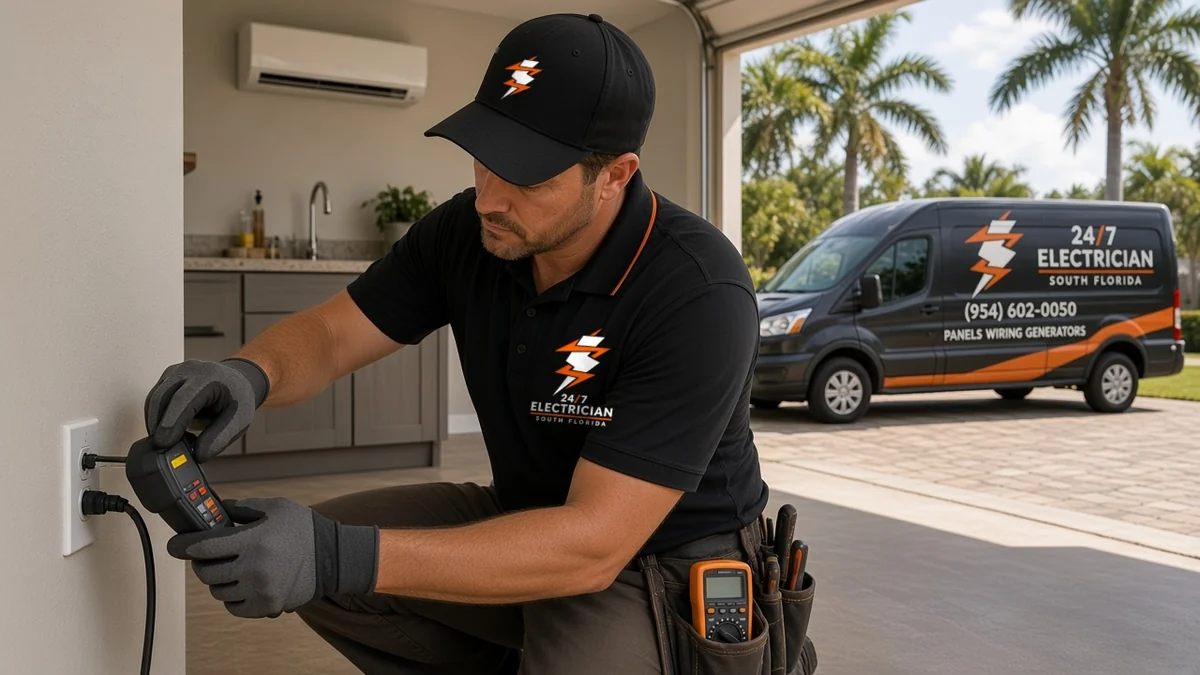
Plenty of homeowners in Dania Beach have extra space that could bring in income or house family: a spare bedroom with its own bath, an efficiency behind the house, a converted garage, or a guest suite with a separate entrance. Before someone moves in, whether a long term tenant, a traveling nurse or a relative, it pays to look at the electrical side carefully.
Added living spaces are often where electrical shortcuts hide. A garage converted years ago with extension cords run through the wall. A window AC unit on a circuit already carrying a refrigerator and a microwave. No smoke alarm in the sleeping area. These things may have been tolerable when the space was a storage room. They are not acceptable when someone is sleeping there.
This guide walks through the electrical checks that matter most before renting out a room or suite, what tends to go wrong in added spaces, and when to bring in a licensed electrician.
Start with the big question: was the space built as living space?
A spare bedroom inside the original home is usually already wired as a bedroom. A converted garage, an enclosed patio or a detached structure may not be.
If the space was converted, try to find out:
- Was it permitted? Your city or county may have records of permits for the conversion.
- Who did the electrical work? A licensed contractor, a handyman or a previous owner?
- Does the wiring look like house wiring or like a workaround? Cords stapled along baseboards, exposed cable, or outlets on extension boxes are warning signs.
Unpermitted conversions can create problems with insurance, resale and safety. Local rules on accessory units, separate entrances and rentals vary, so check with the City of Dania Beach before you rent out a converted space. On the electrical side, a professional inspection tells you what you are working with.
Check 1: Smoke alarms where people sleep
This is the single most important electrical related check. Anyone sleeping in the space needs working smoke alarms that will wake them.
- Install a smoke alarm in the sleeping room and in the area outside it.
- Hardwired, interconnected alarms are the standard in newer construction: when one sounds, they all sound. If the main house has interconnected alarms, adding the suite to that system means a fire in one area alerts everyone.
- Replace old alarms. Smoke alarms have a limited life. Check the date on the back, and replace any that are past the manufacturer's recommended age.
- Test monthly and replace batteries in battery backed units as recommended.
If the suite has a gas appliance, a fireplace, or an attached garage, also install carbon monoxide alarms.
Check 2: GFCI protection near water
Ground fault circuit interrupter (GFCI) protection shuts off power quickly if current starts flowing where it should not, such as through a person standing on a wet floor. Guest suites often have bathrooms, kitchenettes, wet bars or laundry, all areas where GFCI protection is expected.
Check that outlets are protected in:
- bathrooms
- kitchenette counters and near sinks
- laundry areas
- exterior outlets near the suite entrance
- garages, if the suite is a garage conversion
Press the test button on each GFCI outlet. It should click off, and the outlet should lose power. Press reset to restore it. If a GFCI does not trip or will not reset, it needs attention.
Check 3: AFCI protection in living areas
Arc fault circuit interrupter (AFCI) protection detects dangerous arcing, the kind of electrical sparking that can happen with damaged cords, loose connections or nails through wires. Current electrical codes call for AFCI protection in most living areas of homes, including bedrooms.
Older homes and older conversions may not have AFCI protection. Adding it is usually done at the panel with AFCI breakers, though sometimes AFCI outlets are used. An electrician can tell you whether your panel accepts AFCI breakers and whether nuisance tripping on older wiring points to a hidden problem worth fixing.
Check 4: Enough circuits for how the space will be used
This is where added spaces most often fall short. A room that once held a desk and a lamp is now expected to run:
- an air conditioner or mini split
- a refrigerator or mini fridge
- a microwave and coffee maker
- a TV, computer and phone chargers
- sometimes a hot plate, air fryer or space heater
If all of that runs on one 15 amp bedroom circuit, the breaker will trip, and worse, connections can overheat over time.
What to look for:
- How many circuits serve the space? An electrician can trace circuits and tell you.
- Is there a dedicated circuit for the AC? Window units and mini splits often need their own circuit.
- Is there a dedicated circuit for kitchenette appliances? Microwaves and other cooking appliances draw a lot of power.
- Does the breaker trip? Frequent tripping is a sign the circuit is overloaded or has a fault.
For larger suites or detached units, the solution may be a subpanel: a smaller panel fed from the main panel, providing several circuits close to where they are needed. That depends on the capacity of the main service and panel.
Check 5: Outlets, switches and wiring condition
Walk the space and look closely:
- Loose outlets where plugs fall out, or outlets that move in the wall
- Discolored or warm outlet covers or switches
- Buzzing, crackling or burning smells
- Two prong outlets with no ground
- Extension cords used as permanent wiring, especially through walls, under rugs or across doorways
- Exposed wiring or open junction boxes
- Light fixtures that flicker when other appliances turn on
Any of these is a reason to have an electrician take a look before someone moves in.
Short term guests and long term tenants use power differently
How the space will be used changes what you should plan for.
Long term tenants bring their own belongings, and with them their own appliances: a larger TV, a gaming computer, an extra fridge, a hair dryer, maybe an aquarium or a home office setup. Over months, they settle into routines that load the same circuits every day. Plan for real everyday living, not just a guest's suitcase.
Short term and furnished stays tend to run the AC hard, use the kitchenette heavily and charge many devices at once. Guests also do not know the house. A tripped breaker at night is more likely to become a call to you, so clear labels and a reachable panel matter even more.
Family members living in the suite, such as an aging parent, may bring medical equipment, lift chairs or adjustable beds. Ask what they will use, and make sure the outlets near the bed and the bathroom are on circuits that can handle it.
Whichever group you expect, ask the person moving in what they plan to plug in. It is a simple question that prevents overloaded circuits.
Check 6: The panel itself
The main panel feeds the house and the added space. Before adding a tenant's load:
- Is the panel in good condition? Rust, scorch marks or a burning smell are red flags.
- Is it a brand known for problems? Some older panel brands have well documented concerns. If your panel is one of them, it is worth evaluating before adding load.
- Is there room for more breakers? A full panel limits what can be added.
- Are breakers labeled? Your tenant may need to reset a breaker. Clear labels help everyone, and a labeled panel saves time in an emergency.
- Does the tenant have access? If the panel is in the main house and the tenant cannot reach it, think about how breaker trips will be handled.
Check 7: Exterior lighting and the path to the entrance
Many guest suites have separate entrances along the side or back of the house. A dark path is a safety problem. Check that:
- the entrance has a working light, ideally on a switch inside the suite or a motion sensor
- the path from the street or driveway is lit
- exterior outlets have weatherproof covers and GFCI protection
In a coastal city like Dania Beach, exterior fixtures and covers face salt air and heavy rain. Fixtures rated for wet locations and corrosion resistant materials hold up better.
Talk to an Electrician
We answer the phone fast
From panels and wiring to lighting, generators, EV chargers and three phase power, we cover South Florida homes and businesses, including emergency repairs. Share the problem and we map out the repair.
Call (954) 602-0050Check 8: Emergencies and outages
Think through what happens when something goes wrong.
- Who resets a tripped breaker? Show the tenant where the panel is, or give them a subpanel in the suite.
- What if the power goes out? Provide a flashlight and explain how to report an outage.
- Medical equipment. If a tenant or family member relies on oxygen or other powered medical equipment, plan for outages. Our guide on power planning for home medical equipment covers this in more detail.
- Generators. If the home has a generator, make sure the tenant knows how it works and that it is connected safely through a transfer switch or interlock, never backfed through an outlet.
Check 9: Bathroom ventilation and humidity
Florida humidity is hard on a small suite. A bathroom without a working exhaust fan leaves moisture in the air, and moisture finds its way into outlets, switches and light fixtures over time. It also leads to mold, which nobody wants in a rental.
Make sure the suite bathroom has an exhaust fan that actually moves air outside, not into the attic. Fans on a timer or humidity sensing switch help, because tenants often forget to leave the fan running after a shower. If the fan is noisy, weak or not vented properly, fix it before someone moves in.
Common findings in older coastal homes
Dania Beach has many homes built decades ago, and many sit close enough to the ocean and the Intracoastal to feel the salt air. A few patterns come up repeatedly when added spaces are inspected:
- Corroded exterior outlets and fixtures, especially on the side of the house facing the water
- Original wiring in the main house feeding a newer addition, sometimes without enough capacity
- Mixed wiring types, where an older circuit was extended with newer cable during a conversion
- Outlets added in a garage conversion on the old garage circuit, which was never meant to serve a bedroom with an air conditioner
- Missing grounding on older circuits
None of these is unusual, and all of them are fixable. The point is to find them before a tenant does.
Separate metering and billing questions
Some owners want to bill tenants for electricity separately. Options range from including utilities in rent, to submetering, to a separate utility service in some cases. Each option has practical and regulatory considerations, and a separate service involves the utility, permits and possibly significant work. Ask an electrician and the utility about what is possible for your property before promising anything in a lease.
Permits and why they matter
Adding circuits, a subpanel, or rewiring a converted space usually requires a permit. Permits can feel like a hassle, but they help you:
- confirm the work meets code
- avoid problems with insurance claims
- avoid surprises when you sell the home
- protect the people living in the space
A licensed electrician handles permit applications and coordinates inspections.
Keep a simple record of the work
A short written record of what was checked, what was repaired, and who did the work is useful later. If a tenant reports a problem, you can see what was already reviewed. If you sell the home, a buyer or an inspector may ask what was done in the added space. If an insurer asks how the space was prepared for occupancy, you have notes instead of memory.
The record does not need to be formal. A dated list of the checks, photos of the panel directory, and copies of any invoices or permits are usually enough. Keep them with the lease. If an electrician completes an inspection or adds circuits, ask for a brief written summary of findings and the work performed, and file that with the rest.
What to tell your tenant on move in day
A short walkthrough on the first day prevents a lot of late night calls. Show the tenant:
- where the panel or subpanel is, which breakers serve the suite, and how to reset one
- where the GFCI outlets are and how the reset button works
- how to test the smoke alarm
- which outlets are on the AC circuit, and that space heaters or extra appliances should not share them
- how to reach you, and what counts as an emergency (burning smell, sparks, warm outlets, repeated tripping)
Put the same information on a single page and leave it in the suite.
A quick pre rental checklist
Before someone moves in, confirm:
- [ ] Smoke alarms in and outside the sleeping area, tested
- [ ] Carbon monoxide alarm if needed
- [ ] GFCI protection in bathroom, kitchenette, laundry and exterior outlets, tested
- [ ] AFCI protection evaluated for living areas
- [ ] Dedicated circuits for AC and major appliances
- [ ] No extension cords used as permanent wiring
- [ ] No loose, warm or damaged outlets or switches
- [ ] Panel in good condition with labeled breakers
- [ ] Exterior entrance lighting working
- [ ] Tenant knows where the panel is and how to reset breakers
- [ ] Any conversion work permitted, or a plan to address it
When to call a licensed electrician
Call a professional if you find:
- wiring done without permits in a converted space
- frequent breaker trips
- warm outlets, burning smells or flickering lights
- no smoke alarms or old alarms that need hardwiring
- a panel with known issues or no room for new circuits
- a need for a subpanel, new circuits or AFCI protection
An electrical safety inspection before renting gives you a clear list of what needs attention and what is fine as is.
Common questions
Do I need an inspection before renting out a room? It is not always required, but it is a smart step, especially for converted spaces. It protects your tenant, your property and you.
Can I just use power strips for the extra appliances? Power strips do not add capacity. They plug into the same circuit. If the circuit is overloaded, a power strip makes it worse.
My suite has a window AC on a regular outlet. Is that okay? It depends on the unit's power draw and what else is on the circuit. Many window units need a dedicated circuit. An electrician can check.
Should the suite have its own panel? For larger suites with a kitchenette and AC, a subpanel can make sense. It depends on your main panel's capacity.
Who is responsible if something goes wrong? Responsibilities depend on your lease and local rules. Keeping the electrical system safe and documented is in everyone's interest.
Rent out the space with confidence
An extra room or suite can be a real benefit to your household. Getting the electrical basics right first makes it safe for the person living there and gives you peace of mind.
24/7 Electrician helps Dania Beach homeowners evaluate and upgrade added living spaces.
- Book an electrical safety inspection
- Read our rental property electrical safety guide for landlords
- See where GFCI outlets are required
- Learn about hardwired smoke detector replacement
- Understand subpanel installation
- Serving Dania Beach
Call 24/7 Electrician at (954) 602-0050.
Request Service
Tell us what is happening and we will take it from there
Use this form to give the office the full picture in one step: what is happening, the property location, entry details and the time you need help. Whoever calls you back has read it first.
If the power is out or something smells like it is burning, do not type. Call (954) 602-0050. We answer the phone fast.
Where We Work
36 cities across three counties
Every city has its own page for planned work, and its own page for after hours. Please choose the name of your city, or tap Emergency for urgent dispatch.
Broward County
- Coconut CreekEmergency
- Cooper CityEmergency
- Coral SpringsEmergency
- Dania BeachEmergency
- DavieEmergency
- Deerfield BeachEmergency
- Fort LauderdaleEmergency
- Hallandale BeachEmergency
- Hillsboro BeachEmergency
- HollywoodEmergency
- Lauderdale-By-The-SeaEmergency
- Lauderdale LakesEmergency
- LauderhillEmergency
- Lighthouse PointEmergency
- MargateEmergency
- MiramarEmergency
- North LauderdaleEmergency
- Oakland ParkEmergency
- ParklandEmergency
- Pembroke ParkEmergency
- Pembroke PinesEmergency
- PlantationEmergency
- Pompano BeachEmergency
- Southwest RanchesEmergency
- SunriseEmergency
- TamaracEmergency
- West ParkEmergency
- WestonEmergency
- Wilton ManorsEmergency