24/7 Electrician
Carbon Monoxide Alarms and Hurricane Generator Season
Running a generator after a storm? Learn why carbon monoxide alarms matter, where they belong, how to test them and how to keep your family safe.
The quiet danger that follows the storm
Every hurricane season, the same pattern repeats. A storm passes, the power goes out, the heat builds inside the house, and families reach for a portable generator to keep the refrigerator and a fan running. The relief is real, and so is a risk that few people can see or smell: carbon monoxide, a gas produced whenever fuel burns, and one that quietly builds up in enclosed spaces.
Carbon monoxide has no color, no odor and no taste. A person cannot sense it, and the early symptoms can feel like ordinary tiredness or a mild illness. Headache, dizziness, nausea, confusion and weakness are common. Sleeping people may never wake up to notice them. That is why a working alarm is not a luxury in a home that uses any fuel-burning equipment.
The purpose of this article is practical. It explains why carbon monoxide alarms matter most during generator season, where they should be placed, how to keep them working, and how to run backup power in a way that keeps exhaust away from your family. It is general safety information, not a replacement for the instructions that come with your alarms and your generator.
It also touches on the electrical side of backup power, because the safest generator setup is both a gas question and a wiring question. Done right, you get light, cooling and refrigeration without putting anyone in danger.
Where carbon monoxide comes from in a Florida home
Carbon monoxide is produced by incomplete burning of carbon-based fuels. In a typical home, the usual sources are gas appliances, fireplaces, water heaters, gas dryers and cars idling in attached garages. During an outage, new sources appear: portable generators, charcoal grills, camp stoves, lanterns and sometimes even cooking equipment used indoors out of desperation.
Portable generators are the largest concern after storms. A small engine can produce a lot of exhaust, and that exhaust contains carbon monoxide in concentrations that can be dangerous within a short time in a poorly ventilated space. The gas can seep through gaps in walls, doors, vents and windows, even when the generator is outside. Placing the generator too close to the house, or in a garage with the door partly open, is a well-known cause of tragedies after storms.
Florida homes have features that complicate things. Many have attached garages, lanais and screened porches, which feel outside but trap exhaust. Windows are often closed for air conditioning or shuttered for storms. Air returns and vents can pull outdoor air, including exhaust, into the house.
The result is that a generator that seems far enough away can still affect the indoor air if wind carries the exhaust toward an opening. Distance, direction and a reliable alarm all matter, and none replaces the others.
Why a carbon monoxide alarm earns its place
A carbon monoxide alarm does what your senses cannot. It samples the air and sounds a loud signal when levels rise to a point that the device is designed to detect. For a sleeping family, that signal can be the difference between a scare and a tragedy.
It helps to think of CO alarms as a separate layer from smoke alarms. A smoke alarm detects particles or heat from a fire. A CO alarm detects a gas that may have no smoke at all. Some devices combine both functions, but the two sensors are different, and the combined device must be rated for both. Our guide on hardwired smoke detector replacement and interconnection explains how alarms in the home can be connected so one sounds all.
Alarms are particularly important in households that use generators because the risk changes overnight. A home that never had a CO problem on a normal day can develop one in a single night when a generator runs. The alarm is the safety net that works while people sleep.
An alarm is not a license to be careless, however. It signals trouble after the gas is in the air. The primary protection is keeping exhaust out of the building in the first place, and the alarm is the backup that tells you when something went wrong.
Where to place alarms and how many you need
Placement matters. Manufacturers generally recommend a CO alarm on every level of the home and outside each sleeping area, so the sound reaches people when they are asleep with doors closed. Follow the instructions that came with your model, since the exact guidance can vary between products and local requirements.
Do not install alarms right next to fuel-burning appliances, where short bursts at startup can cause nuisance alarms. Also avoid placing them in dead-air spaces, such as behind curtains or furniture, and near vents or fans that could blow gas away from the sensor. Humid areas like bathrooms may affect some devices, so check the product instructions.
Think about the layout of your house. A single-story home with bedrooms in one wing needs an alarm in the hallway outside those rooms. A two-story home needs alarms on both floors. If you have an attached garage, an alarm near the door into the house adds a useful layer, particularly if vehicles or equipment run there.
Plug-in, battery and hardwired models all exist. Battery-powered units keep working in an outage, which makes them valuable during generator season. Plug-in units with battery backup also continue to work when the power fails. Hardwired units usually include a battery backup as well. If you are not sure which type you have, check the label or the manual.
Finally, consider portable battery alarms for travel and for areas where you run equipment. They are not a substitute for permanent alarms, but they add coverage for places like a camper, a boat or a workshop.
Testing, replacing and keeping alarms working
An alarm that does not work is worse than no alarm, because it creates false confidence. Test each alarm monthly using the test button, and mark the date on a calendar so it becomes a routine. If an alarm does not sound when tested, replace the batteries, and if it still does not work, replace the unit.
Batteries should be replaced on a regular schedule even if they still seem fine. Many families change them at the start of hurricane season each year. If your alarm chirps, that chirp is a signal that the battery is low or that the unit has reached the end of its life. Do not silence it and ignore it.
CO alarms do not last forever. The sensors wear out, and manufacturers specify an end-of-life period, often marked on the back of the unit or announced by a special chirp pattern. Check the date on your devices. If you cannot find one, or if the alarms are many years old, replacing them is a sensible step.
Keep the devices clean. Dust and cobwebs can interfere with sensors. Use a soft brush or a vacuum on the vents gently, following the manufacturer's guidance. Do not spray cleaners or paint on or near an alarm.
Know the sound. Alarm patterns differ between CO, smoke and low-battery signals. Read the manual and make sure every adult and older child in the home can tell them apart.
Running a generator without putting your family at risk
A generator should be run outdoors only, in an open, well-ventilated area, positioned so the exhaust points away from the house. It should be far enough from doors, windows and vents that exhaust cannot drift in, and the distance should follow the manufacturer's instructions. Never run a generator in a garage, a carport enclosed on the sides, a basement, a crawl space, a lanai or near an open window, even with a door or window open.
Keep it dry, too. A generator should not sit in rain or standing water, and a proper cover or canopy designed for generators can protect it. Do not touch a generator with wet hands or while standing in water. After a flood, do not use any equipment that has been wet.
Refuel only when the generator is off and cool. Fuel vapors and hot engine parts are a fire risk, and spills near a hot engine can ignite. Store fuel in approved containers away from living spaces, and do not keep large quantities indoors.
Also, think about noise and neighbors, who may be in earshot of your equipment. Keeping the generator away from neighboring windows is courteous and safer for them too.
Finally, never attach a portable generator to the house by plugging it into a wall outlet. That practice, sometimes called backfeeding, can send power back into the utility lines and endanger line workers, and it can damage your wiring or start a fire. If you want a generator to power parts of your home, the safe approach is a properly installed transfer switch or inlet, done by a qualified electrician. Our article on generator transfer switch installation describes how that works.
The electrical side of safe backup power
Many families run their generators with long extension cords snaking through windows and doors. This is common during storms, but it brings its own hazards. Cords that are not rated for the load can overheat. Cords that pass through partly open windows invite exhaust into the home. Cords laid in water or across walkways create shock and trip hazards.
A better arrangement is a permanent setup that powers the circuits you care about without cords. A transfer switch isolates your home from the utility and connects selected circuits to the generator. A power inlet on the outside wall lets you plug a generator in through a heavy cord without opening a window. Both are installed by an electrician, usually with a permit, and both reduce the improvisation that leads to accidents. See our overview of generator installation for the possibilities.
Load matters, too. A generator has a limit, and running too many items at once can overload it. An electrician can perform a load review to determine which circuits to power and what size of generator makes sense. That way, you do not have to guess, and you can avoid plugging in too much and stressing the equipment.
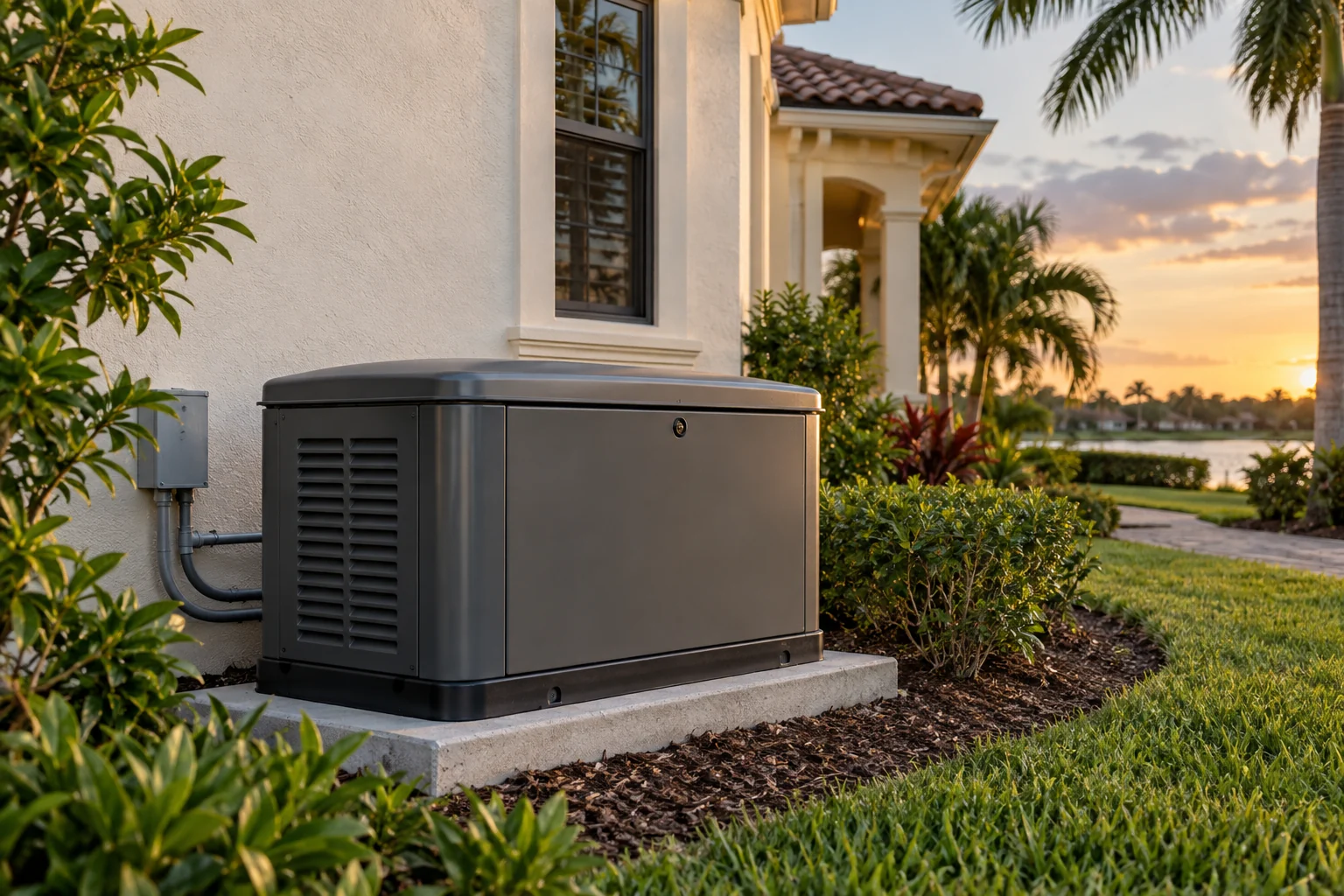
Standby generators, which are permanently installed and run on a fuel line or tank, have their own exhaust considerations. They must be located properly relative to windows, doors and air intakes. Regular maintenance keeps them reliable and safer. Our standby generator maintenance schedule outlines the checkups worth planning.
Surge protection is another consideration. When utility power returns after an outage, surges can damage electronics. Whole home protection helps reduce that risk, and it is a good companion to any backup power plan.
What to do if the alarm sounds or someone feels unwell
If a carbon monoxide alarm sounds, treat it as real. Do not assume it is a false alarm. Get everyone, including pets, out of the building into fresh air right away. Then call emergency services from outside. Do not go back in to look for the source, and do not re-enter until responders say it is safe.
If the generator is running and the alarm sounds, shutting it off from a safe, open-air position can help, but only if you can do so without entering the affected area. Your first priority is moving people out, not fixing the equipment.
Symptoms such as headache, dizziness, nausea, confusion or fatigue, especially if several people or pets have them at the same time and they improve when outside, are a warning sign. Seek medical attention even if symptoms fade. Carbon monoxide poisoning can have lingering effects, and a medical professional can test for exposure.
After an incident, do not use the generator or the appliance involved until it has been checked. Have the equipment, the ventilation and the surroundings examined. If the problem involved the electrical system, such as a damaged cord or an improvised connection, have an electrician review it.
Finally, learn from the event. Ask what let the gas in: a generator too close, a door or window left open, a blocked vent. Fix the cause and update the family plan so it does not happen again.
Preparing before the next storm
The right time to prepare is before a storm is on the way, when stores are stocked and calendars are open. Check your alarms now. Test them, replace batteries, and confirm that you have one on each level and near each bedroom. Replace any that are past their life.
Decide where the generator will go, if you own one, and measure the distance from the house. Plan how you will power the essentials without cords through windows. If your generator has not been run for months, test it outdoors in a safe location, following the owner's manual, so you know it starts. Replace old fuel as the manufacturer recommends.
Talk with your household. Make sure everyone knows the rules: generators outside only, never in or near the house, never refuel while running, and what to do if an alarm sounds. Children and older relatives especially need to hear this. Our hurricane and storm electrical preparation guide pairs well with this one for the broader plan, and our local page on hurricane generator hookups in Hollywood shows how a hookup can be planned.
If you have flooding, do not touch or reset anything that is wet. Keep away from standing water that might be near electrical equipment, and have a qualified electrician check the system before it is used again.
Taking an hour to prepare is a small effort compared with the protection it provides for the people you love.
It also helps to write the plan down and keep it where everyone can find it. A short list taped inside a closet door, covering where the generator goes, who is allowed to start it, where the alarms are, and which number to call, removes guesswork during a stressful night. Include neighbors or relatives who may stay with you, and show houseguests where the alarms are and what they sound like.
Think about vehicles as well. Never run a car or truck in an attached garage, even briefly with the door open, and never leave one idling near the house to charge a phone. After a storm, cars are a tempting power source, but exhaust can enter the home just as it does from a generator. If you need to charge devices, a battery pack is a safer choice.
Common questions
Do I need a carbon monoxide alarm if my home has no gas appliances?
If you use a generator, have an attached garage, burn fuel for heat or cooking, or run any fuel-burning equipment, an alarm is wise. Outages make these situations more likely, so many families keep alarms in every home.
How far from the house should a generator be?
Follow the manufacturer's instructions, which give a minimum distance, and keep exhaust pointed away from doors, windows and vents. Never run one in a garage or enclosed area, even with a door open.
Are battery alarms or plug-in alarms better during an outage?
Battery-powered units and plug-in units with battery backup keep working when the power is off. Check which type you have, and keep spare batteries on hand at the start of hurricane season.
Can I plug my generator into a wall outlet to power the house?
No. That practice can send power back into utility lines and cause fires or injuries. If you want to power parts of your home, a transfer switch or inlet installed by an electrician is the safe approach.
What should I do if the alarm goes off during a storm?
Move everyone outside to fresh air immediately, call emergency services, and do not go back in until responders say it is safe. Never ignore an alarm because you think it is a mistake.
If you want an electrician to plan a safe generator connection or review your backup power setup in Broward, Miami-Dade or Palm Beach County, call us at (954) 602-0050. Standard jobs are quoted by phone before dispatch, complex jobs are quoted on site and carry a service call charge, and the electrician comes to you. For urgent problems, ask about our 24-Hour Emergency Line.
Request Service
Tell us what is happening and we will take it from there
Fill this out and the office gets the whole picture at once: what is wrong, where the property is, how you get in, and when you need somebody. That means the electrician who calls you back already knows the job instead of starting the conversation from zero.
If the power is out or something smells like it is burning, do not type. Call (954) 602-0050. We answer the phone around the clock.
Where We Work
36 cities across three counties
Every city has its own page for planned work, and its own page for after hours. Please choose the name of your city, or tap 24hr for the emergency page.
Broward County
- Coconut Creek24hr
- Cooper City24hr
- Coral Springs24hr
- Dania Beach24hr
- Davie24hr
- Deerfield Beach24hr
- Fort Lauderdale24hr
- Hallandale Beach24hr
- Hillsboro Beach24hr
- Hollywood24hr
- Lauderdale-By-The-Sea24hr
- Lauderdale Lakes24hr
- Lauderhill24hr
- Lighthouse Point24hr
- Margate24hr
- Miramar24hr
- North Lauderdale24hr
- Oakland Park24hr
- Parkland24hr
- Pembroke Park24hr
- Pembroke Pines24hr
- Plantation24hr
- Pompano Beach24hr
- Southwest Ranches24hr
- Sunrise24hr
- Tamarac24hr
- West Park24hr
- Weston24hr
- Wilton Manors24hr