24/7 Electrician
After a Hurricane: Checking for Electrical Damage Safely
After a storm passes, the hazards are not over. Learn what electrical damage to look for from a safe distance, what never to touch and when to call.
The storm is over, but the electrical hazards are not
When the wind drops and the rain stops, relief arrives first. Then comes the careful look around: the roof, the trees, the yard and the street. Hurricane damage is usually obvious to the eye, but electrical damage often is not. A house can look fine and still hold wet wiring, a damaged meter or a service line that is no longer safe.
That is why the hours and days after a storm are a high risk period for electrical injuries. People are tired, the house is dark and hot, and everyone wants things back to normal. Pressing a switch or resetting a breaker feels like a small, natural step. After a flood or heavy wind driven rain, it can be exactly the wrong one.
This article is a calm guide to what you can do safely after a hurricane, what to observe from a distance, and what to leave strictly alone. It does not give instructions for opening panels or repairing wiring, because those tasks are unsafe for homeowners, particularly after a storm.
The core principles are straightforward. Assume anything wet might be energized. Assume downed lines are live. Do not touch, reset or test anything that has been wet. Keep family and neighbors away from hazards, and call a qualified electrician who can inspect your system before you restore normal use.
First, stay safe outside the house
Before inspecting your own property, stay aware of what is around you. Downed power lines can lie in yards, streets and driveways, and they can be hidden under water, fallen trees or debris. Treat every wire on the ground as live, even if it looks dead or the lights in the neighborhood are out.
Keep a safe distance from fallen lines and from anything touching them, including fences, puddles, vehicles and branches. Do not drive over them or try to move them with sticks or tools. Report them to the utility and emergency services, and warn neighbors and children to keep away.
Standing water deserves special caution. Flooded yards and driveways can hide energized cables, damaged outdoor outlets and wet equipment. Do not wade through water if you know that power may be on nearby, and never use electrical equipment while standing in water.
Also watch for broken limbs that rest against service wires, leaning poles, sagging lines and loose weatherheads at the roofline. If something looks pulled away, bent or detached, keep away and report it. Our guide to what to do first in a Broward electrical emergency can help you decide whom to call.
What you can safely look at from a distance
You can learn a lot by looking carefully without touching anything. Start with the service connection, the place where power lines reach your house. Note whether the line from the pole is still attached, whether the mast or pipe at the roof is bent or loose, and whether the meter base looks pulled from the wall.
Look at the electric meter. A meter that is cracked, tilted, scorched or hanging off the wall is a serious sign. A meter that appears water stained or sits in flood water suggests the electrical service is damaged. Do not touch it and do not attempt to pull it, since the utility controls the meter and the service line up to it.
Look at exterior items such as outdoor outlets, lights, pool equipment, air conditioning condensers, generators and any cables. Note any that are underwater, torn loose or full of debris. Take photographs from a distance for insurance and for your electrician.
Inside, look from doorways rather than stepping into wet areas. Observe whether water has reached outlets, switches, the panel, appliances or light fixtures. Note ceiling stains, sagging drywall, dripping fixtures and anything that suggests water has entered the walls or ceiling.
Smell and listen too. A smell of burning, a hum or buzz, or the sound of sparking or crackling means something is wrong. Keep everyone away and, if it is safe and dry to do so, shut off power at the main breaker. If it is not safe, leave the area and call for emergency help.
The rule for anything wet: do not touch or reset it
Water and electrical equipment are a dangerous combination, and storm water is worse because it carries salt, dirt and sometimes sewage that conduct electricity and corrode metal. If outlets, switches, the panel, appliances or wiring have been wet, do not touch them and do not try to turn them on.
Do not reset breakers that tripped during the storm. A breaker may have tripped because of a fault caused by water. Resetting it can re-energize wiring that is damaged, creating a shock or fire risk. Leave it and have an electrician inspect it.
Do not use a wet outlet, even after it appears to have dried. Moisture may remain inside the wall, the box or the device, and corrosion starts within days. Equipment dried on the outside may still be wet inside, and it should be tested before it is used.
Do not use appliances that were in floodwater without inspection. That includes refrigerators, washers, dryers, water heaters, air conditioning units and pool equipment. Electrical components inside may be damaged or corroded, and plugging them in can cause a fire or shock.
The same applies to cords, power strips and extension cords that have been wet. Replace them. Our article on electrical inspection after a flood explains in more detail what an inspection covers once water has entered the home.
The electrical panel and the main breaker
The panel is the heart of the home's electrical system, and storms can damage it in several ways. Water can enter through the wall, the conduit or the meter base. Wind driven rain can reach panels on exterior walls or in garages. Flooding can submerge panels mounted low on a wall.
If the panel is wet, rusted or has water marks, do not open it and do not touch the breakers. If the area around it is damp or wet, do not stand there. If you are not sure whether it is safe, treat it as unsafe and wait for an electrician.
Do not try to turn on the main breaker after a storm to see if the house has power. If the utility has restored power to the street, switching on the main can feed energy into damaged wiring. The sequence of restoring power should follow an inspection when there is any sign of water or damage.
A panel that sat in flood water usually needs replacement, not repair, because moisture and contamination affect the internal parts. Your electrician can explain the findings and what is needed. For background on panel concerns, our article on panel replacement and insurance covers how documentation can help.
Even a panel that looks dry can have issues, such as corroded lugs or loose connections caused by vibration and storm surges. A professional inspection offers peace of mind that the heart of your system is sound.
Generators, fuel and carbon monoxide
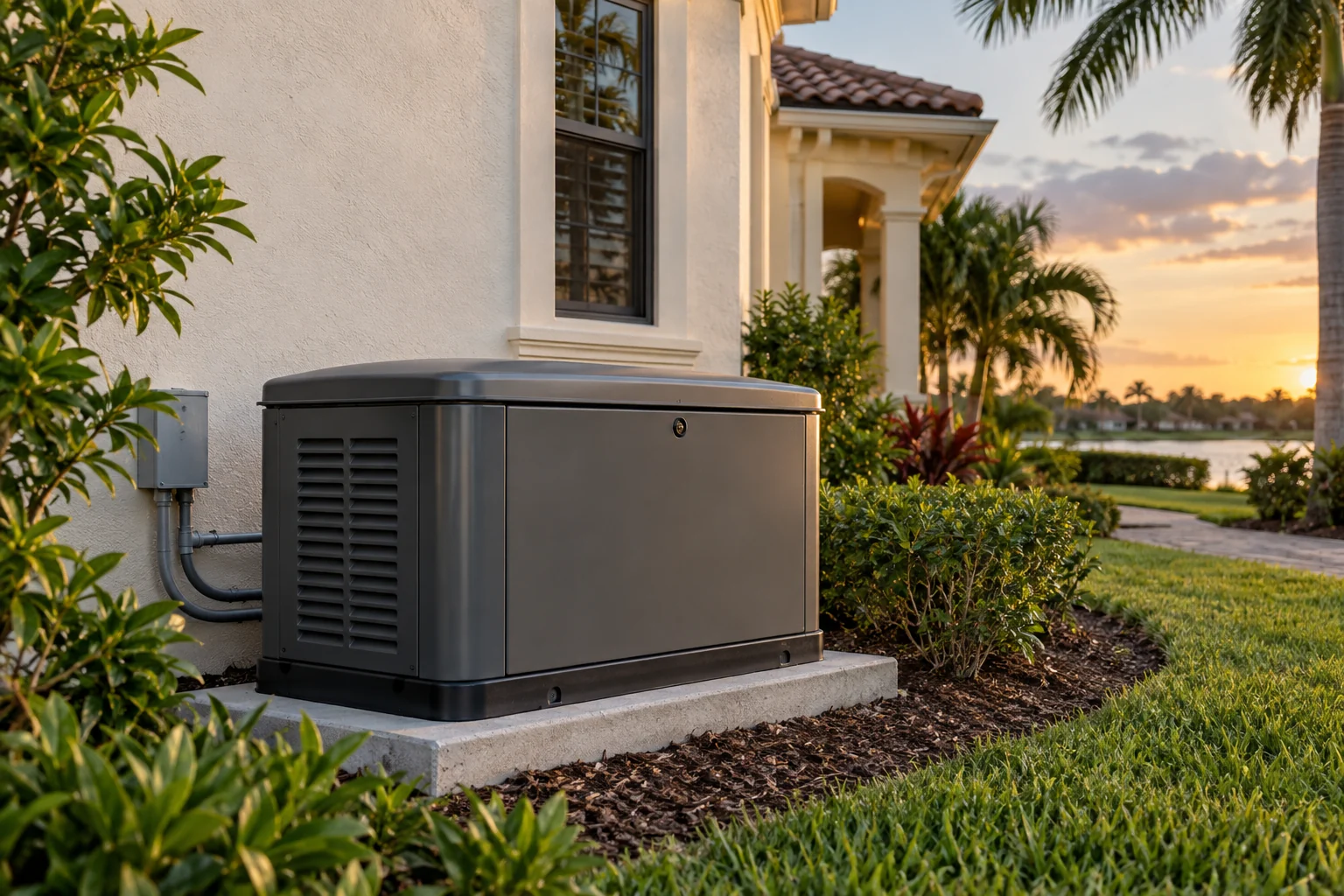
Many families rely on generators after a storm, and generators bring their own hazards. Running a generator indoors, in a garage, or near a window or door can fill a home with carbon monoxide, which is odorless and deadly. Place generators outdoors, well away from the house, with the exhaust pointed away from openings.
Never plug a generator into a wall outlet to power the house. This practice, known as back feeding, can send power out onto the utility lines and endanger lineworkers, and it can damage your wiring and the generator. A safe connection requires a properly installed transfer switch or inlet, as explained in our guide to generator transfer switch installation.
Keep generators dry. A generator should sit on a dry surface, under a protective canopy designed for the purpose, not in standing water. Use cords rated for outdoor use, in good condition and sized for the load, and do not run them under rugs or through doorways.
Refuel only when the generator is off and cool, and store fuel safely away from the house. After running a generator for a long time, give it time to cool before adding fuel. If you smell fuel or notice smoke, shut it down and keep away.
Our page on storm damage electrical repair explains the kinds of problems we are asked to address after hurricanes, including generator connections.
Water in walls, ceilings and light fixtures
Roof damage during a hurricane often allows water into attics, ceilings and walls. Water can travel along wires and collect in light fixtures, ceiling fans and recessed lights. A fixture that is dripping or has a bulging ceiling around it is a hazard.
Do not turn on lights or fans connected to a wet area. If water is dripping from a fixture, stay away from it and avoid standing beneath it. If the circuit is not already off, and it is safe and dry to reach the panel, turn off the breaker for that area, and keep people out of the room.
Drywall that has absorbed water may hide wet wiring and boxes behind it. Even after the surface dries, moisture can remain inside the wall. Electrical parts in these areas may need replacement, and a professional can test and advise.
Insulation soaked with water can hold moisture against wires and boxes, accelerating corrosion. It may need to be removed during repairs, which usually is done alongside other restoration work.
If water enters through an exterior wall, check outdoor outlets, lights and cable entries. Wind driven rain can enter through places that seem sealed, so watch for staining and rust around electrical fixtures on the outside of the house.
Surges, delayed damage and electronics
Storms can cause voltage surges when power lines are damaged or when power returns. These surges can harm electronics, appliances, air conditioning controls and even wiring. Damage may not be obvious immediately, and a device that seems fine may fail days later.
Unplug sensitive electronics during a storm if you have the chance, and wait to reconnect them until the power is stable. A protective device at the panel can reduce surge damage to the whole house, as explained in our article on whole home surge protection.
When power returns after an outage, give the system time. Turn on major appliances one at a time rather than all at once, and watch for unusual behavior such as flickering lights, buzzing sounds or the smell of heat. If anything seems wrong, turn the item off and call an electrician.
Document damage for insurance. Photograph visible issues, keep receipts for repairs and ask your electrician for a written description of the findings and work done. This documentation can make the claims process smoother.
Remember that damage can show up later. Lights that flicker, outlets that stop working, breakers that trip repeatedly or a panel that is warm after a storm should be checked even if the house seemed to come through fine.
When to call an electrician, and what to expect
Call as soon as it is safe to do so if you see storm damage to the service line, the meter, the panel, outdoor equipment or any wiring. Call if water reached outlets, switches or the panel, if breakers will not reset or if you smell burning. If there is an immediate danger, such as sparking, smoke or fire, leave and call emergency services first.
Understand that after a major storm, electricians are in high demand. It helps to be clear about what you see, whether anyone is in danger and whether the situation is urgent. We prioritize safety issues such as damaged services, wet panels and active hazards.
When the electrician arrives, they will start with safety, checking the service, the panel and the visible wiring. They will test circuits, identify damaged equipment and explain what needs replacement or repair. They may recommend phased restoration, powering safe circuits first and leaving damaged ones off until repaired.
Utility coordination is part of the process. If the service line, meter or weatherhead is damaged, repairs may require work by both the utility and an electrician, and an inspection may be needed before power is restored. Our article on hurricane and storm electrical preparation covers how to prepare for these steps before a storm arrives.
Looking after your family and neighbors in the days that follow
Recovery after a storm can take days or weeks, and the electrical risks change over that time. In the first hours, downed lines and wet panels are the main concern. A few days later, the hazards become generators running around the clock, extension cords across wet lawns, overloaded outlets and lights left on in damaged rooms. Keep reminding the household which rules still apply.
Check on neighbors, especially older residents and anyone who relies on medical equipment. Offer help with safe options, such as a charged phone, a battery lantern or a visit to a cooling center, instead of suggesting improvised electrical fixes. If a neighbor is running a generator in a garage or has cords through windows, gently point out the hazards.
Keep children and pets away from damaged areas. A yard with fallen limbs may hide a cable, and a flooded garage may hold a wet freezer or a charging tool. Make the rule simple: nobody touches anything electrical that was wet or damaged, and nobody goes into flooded rooms without an adult.
Use battery powered lights instead of candles when possible. Candles and open flames are a fire risk in a house with damaged wiring, gas lines or stored fuel. Keep a charged phone, and use it sparingly if the outage is long, so you can still call for help.
Be patient with the restoration process. Utilities restore power in an order that serves critical services first, and each house must be safe to reconnect. If your meter or service line was damaged, an electrician may need to repair it and an inspection may be required before the utility reconnects.
Finally, keep records of what you did and saw. Photographs, dates, receipts and notes help with insurance and give your electrician a clear picture. The goal is not to rush back to normal, but to return to it safely, with every circuit that was affected checked and, where needed, repaired.
Common questions
Is it safe to reset a breaker that tripped during the storm?
Not if there is any chance water reached the wiring or panel. A breaker that tripped may have found a fault. Leave it off, avoid wet areas and have an electrician inspect before restoring power.
Can I use outlets after they dry out?
Do not assume so. Moisture can remain inside walls, boxes and devices, and corrosion begins within days. Have an electrician test and replace affected outlets and wiring before using them.
What should I do about a downed power line?
Stay far away and treat it as live. Keep others back, do not touch anything in contact with it, and report it to the utility and emergency services. Do not try to move it yourself.
Is it safe to run a generator after a hurricane?
Yes, if it is outdoors, away from the house, on a dry surface and connected safely. Never run it indoors or in a garage, and never plug it into a wall outlet. Use a properly installed transfer switch or inlet.
How do I know if my electrical system was damaged?
Signs include water in the panel or outlets, a damaged meter or service line, tripped breakers that will not stay on, burning smells, flickering lights and appliances that were wet. When in doubt, have an electrician inspect.
If your home was hit by a storm and you are concerned about electrical damage, call us at (954) 602-0050. Standard jobs are quoted by phone before we dispatch, and more complex jobs are quoted on site and carry a service call charge. Our electrician comes to you, and our 24-Hour Emergency Line is there for urgent electrical problems.
Request Service
Tell us what is happening and we will take it from there
Fill this out and the office gets the whole picture at once: what is wrong, where the property is, how you get in, and when you need somebody. That means the electrician who calls you back already knows the job instead of starting the conversation from zero.
If the power is out or something smells like it is burning, do not type. Call (954) 602-0050. We answer the phone around the clock.
Where We Work
36 cities across three counties
Every city has its own page for planned work, and its own page for after hours. Please choose the name of your city, or tap 24hr for the emergency page.
Broward County
- Coconut Creek24hr
- Cooper City24hr
- Coral Springs24hr
- Dania Beach24hr
- Davie24hr
- Deerfield Beach24hr
- Fort Lauderdale24hr
- Hallandale Beach24hr
- Hillsboro Beach24hr
- Hollywood24hr
- Lauderdale-By-The-Sea24hr
- Lauderdale Lakes24hr
- Lauderhill24hr
- Lighthouse Point24hr
- Margate24hr
- Miramar24hr
- North Lauderdale24hr
- Oakland Park24hr
- Parkland24hr
- Pembroke Park24hr
- Pembroke Pines24hr
- Plantation24hr
- Pompano Beach24hr
- Southwest Ranches24hr
- Sunrise24hr
- Tamarac24hr
- West Park24hr
- Weston24hr
- Wilton Manors24hr